










Average Isn't Normal: Why Your Intimate Life Doesn't Need to Match Anyone Else's
How often do "most" couples make love each week? What's the "right" age to settle down? How long should intimacy last? If you've ever typed a question like these into a search bar at midnight, you're in good company. Questions about sexual and relationship averages are among the most common ones people ask — and the anxiety behind them is remarkably widespread.
Here's the reassuring truth that sex researchers keep repeating: being different from the average does not make you abnormal. In fact, the whole idea of a single "normal" sex life collapses under even a little scientific scrutiny. Understanding why can free you from unnecessary worry — and open the door to a more satisfying, self-defined intimate life.
Why We Compare Ourselves to Averages
Averages are genuinely useful tools. They give researchers a compact way to summarize mountains of data and describe broad patterns in attitudes and behavior. Media headlines love them for the same reason — "the average couple does X" is a tidy, shareable sentence.
The problem begins when we quietly convert a statistical description into a personal verdict. Somewhere along the way, "below average" starts sounding like "deficient," and "above average" starts sounding like "excessive." People begin asking themselves whether they're having too little intimacy or too much, whether their bodies measure up, whether their desires are strange. That leap — from a number to a judgment about your worth — is where the harm happens.
Three Reasons the Comparison Almost Never Holds Up
1. Averages Hide Enormous Variation
Real human behavior doesn't cluster neatly around a single number. In most studies of sexual attitudes and activity, responses are spread across a wide range. When scientists describe what's typical, they think in terms of ranges, not points. If your habits, frequency, or preferences differ from the reported average, the odds are excellent that you'd still land comfortably within the range researchers consider perfectly ordinary. Diversity isn't the exception in human intimacy — it's the rule.
2. Averages Can Be Distorted by Extremes
A statistical mean gives equal weight to every case in a sample. That means a small handful of unusual responses can drag the average around significantly. Picture a survey on body measurements where a few participants happen to be adult film performers — the resulting "average" would be skewed upward and unrepresentative of the general population.
This is why researchers often prefer the median, the value sitting exactly in the middle of all responses, with half above and half below. Medians resist distortion and frequently paint a very different picture than means. But medians rarely make headlines — so the numbers you see quoted online may already be misleading before you even compare yourself to them.
3. "Normal" Is Not a Statistical Term
Perhaps most importantly, normality is a judgment, not a measurement. Whether a pattern of intimacy is healthy or fulfilling depends on context that no average can capture: the kind of relationship you're in, your ages, your health, your life circumstances, and — above all — whether you and your partner are actually content.
Consider a long-married couple in their seventies who share intimacy once a year, on their anniversary, and are genuinely happy with that rhythm. Are they "abnormal"? By the numbers, they're far from the average. By any meaningful definition of a healthy relationship — mutual satisfaction, affection, honesty — they're thriving. The statistic is irrelevant to their happiness, and it should be irrelevant to yours, too.
What This Means for Your Own Intimate Wellbeing
Once you let go of the comparison game, something valuable opens up: the freedom to define your own normal. Research and clinical experience consistently point to a few markers that matter far more than any average:
- Mutual satisfaction. Are you and your partner content with your intimate life? That's the metric that counts.
- Open communication. Couples who talk honestly about desires, boundaries, and curiosities report stronger connection, regardless of frequency.
- Comfort with your own body. Self-knowledge — understanding what feels good to you, at your own pace — is a foundation for both solo wellbeing and partnered intimacy.
- Absence of distress. If a difference from the average causes no pain, conflict, or unhappiness, there's nothing to fix.
Many people find that exploring on their own terms — without a scoreboard — is what finally quiets the anxiety. Curiosity about your own responses, preferences, and rhythms is not only healthy; it's one of the most reliable paths to genuine confidence.
From Comparison to Curiosity
If you've spent years measuring yourself against statistics, shifting toward self-discovery can feel unfamiliar. A gentle place to start is private, pressure-free exploration: learning what you enjoy, what relaxes you, and what helps you feel present in your own body. For couples, the same principle applies — shared exploration guided by curiosity rather than benchmarks tends to deepen trust and closeness.
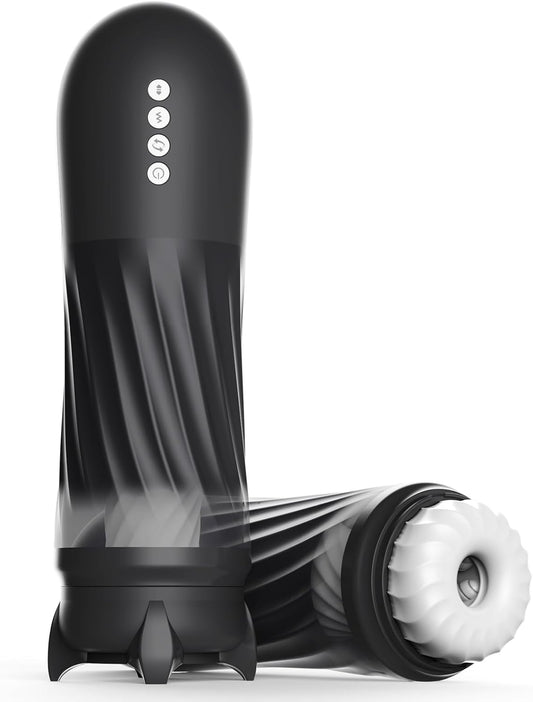
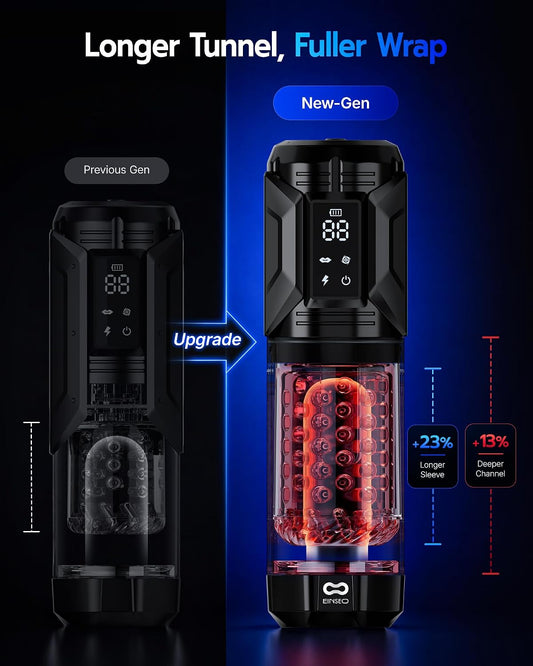
Since everyone's path to comfort and confidence is unique, we've selected a few thoughtfully designed wellness devices that support exploration at your own pace — whether you're discovering what feels right for you, or sharing that journey of curiosity with a partner.
💝 Recommended for You

💝 Recommended for You

💝 Recommended for You

The Bottom Line
Average and normal are not synonyms — and treating them as such causes real, needless anxiety. Averages conceal wide variation, get warped by extreme cases, and say nothing about context or satisfaction. Your intimate life doesn't need to look like anyone else's to be healthy, fulfilling, and entirely yours.
So the next time a headline tells you what "most people" do, take a breath and remember: the only intimate life you need to measure is your own — and the only scale that matters is whether it brings you and your partner genuine contentment.
Disclaimer: This article is for educational purposes and reflects general research insights, not personalized medical or psychological advice.
タグ: