










What Science Reveals About How Men’s and Women’s Sexual Fantasies Differ — and Why It Matters for Your Relationship
Nearly everyone has sexual fantasies, yet we rarely talk about them openly — even with the people we love most. Part of the hesitation comes from a quiet worry: Is what I imagine normal? Does my partner fantasize about the same things I do? Psychological research offers reassuring answers. Studies on sexual fantasy show that while men’s and women’s inner worlds often look quite different on the surface, those differences are common, healthy, and — when understood — can actually bring couples closer together.
The Hidden World of Sexual Fantasy
Sexual fantasy is one of the most universal human experiences. Far from being a sign of dissatisfaction, fantasizing is linked to a healthy imagination, self-awareness, and even greater relationship satisfaction. Researchers such as Dr. Justin Lehmiller, who has studied the science of desire for decades, note that fantasy content tends to follow recognizable patterns — and many of those patterns map onto gender.
In a widely cited line of research published in the Journal of Sex Research and Psychological Bulletin, scientists examined thousands of fantasy narratives and found several consistent differences in how men and women tend to imagine intimacy. Understanding these patterns is not about boxing anyone in — individual variation is enormous — but about giving couples a shared language for desire.
Four Key Differences Researchers Have Found
1. Explicit detail vs. emotional context
Men’s fantasies, on average, tend to be more visually explicit and focused on the physical act itself, often including vivid attention to bodies and sensations. Women’s fantasies, by contrast, more often weave in emotional and romantic content: the atmosphere, the build-up, the feeling of being desired. A woman’s fantasy might linger on candlelight, a slow conversation, or the tension of a rainy afternoon — the story matters as much as the scene.
Neither style is better. They simply reflect different doorways into arousal: one more sensory and direct, the other more narrative and contextual.
2. The setting tells a story
Research consistently finds that women describe the setting of a fantasy in rich detail — a beach at sunset, a cabin in a storm, a dinner that stretches late into the evening. This “prelude” is not decorative; it is central to desire itself. For many women, arousal is responsive, building through mood, anticipation, and emotional connection. Men’s fantasies, meanwhile, are more likely to jump straight to the action.
For couples, this insight is practical gold: investing in atmosphere — lighting, music, unhurried time together — is not indulgence. It is literally part of how desire works for many partners.
3. Numbers and novelty
Men are statistically more likely to fantasize about multiple partners at once, while women’s fantasies more often center on a single connection. Again, these are averages, not rules — plenty of women enjoy group scenarios and plenty of men dream of one devoted partner. The takeaway is simply that the cast of characters in our imaginations often differs, and that is perfectly normal on both sides.
4. Power and surrender
When it comes to dominance and submission in fantasy, the patterns are intriguing. Men fantasize about taking charge and surrendering in roughly equal measure. Women, on average, report submission-themed fantasies more often than dominance-themed ones — a finding researchers interpret not as passivity, but as the appeal of being irresistibly desired within a safe, trusting frame.
What About Sexual Orientation?
Here is one of the most fascinating findings: when researchers compared the fantasies of gay and heterosexual men, and of lesbian and heterosexual women, the only reliable difference was the gender of the imagined partner. The same broader patterns in fantasy content appeared across orientations. In other words, the architecture of desire seems to be shaped less by who we love and more by deeper psychological currents we all share.
Why These Differences Are Good News for Couples
It is easy to misread a partner’s inner world. A partner who craves atmosphere and emotional build-up may feel rushed; a partner whose desire is more spontaneous and visual may feel their advances go unmet. Neither is wrong — they are simply speaking different dialects of desire.
Research on sexual communication suggests that couples who talk about fantasies — even in general, non-explicit terms — report higher satisfaction and closeness. You do not need to share every detail. Simply asking questions like “What helps you get in the mood?” or “What kind of evening feels romantic to you?” opens a door.
Understanding the science also relieves shame. Knowing that your fantasies — however romantic, adventurous, or unusual — fall within the enormous range of normal human imagination makes it easier to accept yourself and be curious about your partner rather than judgmental.
Turning Insight Into Intimacy
So how do you put this knowledge to work? Start small:
- Trade stories, not scripts. Share the feeling of a favorite fantasy — being wanted, being surprised, being unhurried — rather than a detailed blueprint. Feelings are easier to act on together.
- Design the prelude. If one partner’s desire is contextual, co-create the setting: a slow dinner, a massage, a phone-free evening. The build-up is not a delay; it is the main event.
- Stay curious. Treat differences as invitations to explore rather than evidence of incompatibility. The gap between two inner worlds is where discovery lives.
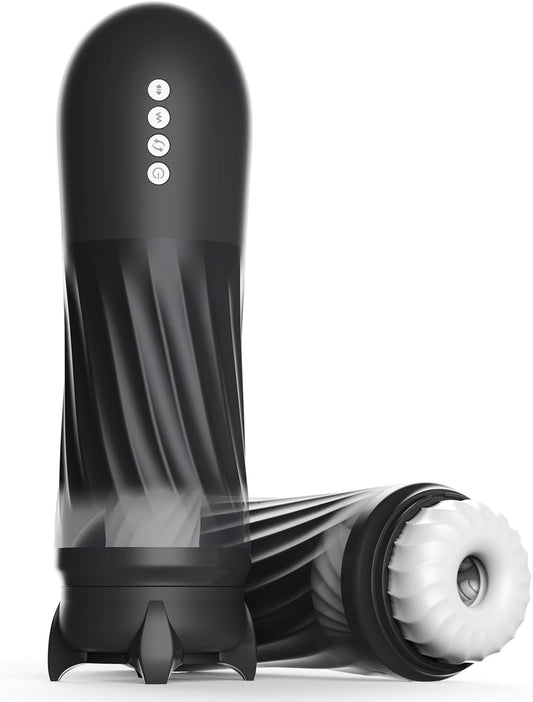
Many couples also find that introducing a thoughtfully chosen wellness product gives them a playful, low-pressure way to explore new sensations together — a shared experiment rather than a test. If this article has sparked your curiosity, here are a few reader favorites that pair beautifully with the themes above:
Understanding desire is the first step — exploring it together is where the fun begins. These carefully selected wellness essentials can help you set the scene, tune into each other’s pleasure, and turn curiosity into connection:
💝 Recommended for You

💝 Recommended for You

💝 Recommended for You

The Bottom Line
Men’s and women’s sexual fantasies often differ in focus, detail, and storyline — and science says that is entirely normal. Far from being a problem to solve, these differences are an opportunity: a chance to learn your partner’s unique language of desire and to write new chapters together. The most satisfying intimate lives are not built on identical fantasies, but on the courage to be curious about each other’s.
タグ: