









3 Surprising Science-Backed Answers to Common Sexual Health Questions
3 Surprising Science-Backed Answers to Common Sexual Health Questions
Some of the most common questions about sex are also the ones people are most embarrassed to ask. Sex educator and researcher Dr. Justin Lehmiller has spent years fielding anonymous questions from college students, and the science behind the answers is often more fascinating than the questions themselves. Today, we are unpacking three of those answers: why some people enjoy mixing mild pain with pleasure, whether pregnancy is possible without intercourse, and what research reveals about how men's and women's arousal patterns genuinely differ.
Whether you are exploring intimacy with a partner or simply curious about your own body, understanding the evidence behind these topics can replace anxiety with confidence—and open the door to healthier, more communicative relationships.
Why Do Some People Enjoy Mixing Pain and Pleasure?
It may seem paradoxical, but a significant number of people find that mild sensations like love bites or a light spanking enhance their arousal during intimacy. Psychologists call the enjoyment of physical or psychological intensity during sexual activity masochism, and research suggests that mild forms are far more common than most people assume.
The key word is context. People who enjoy intense sensation during intimacy do not find random pain arousing—stubbing a toe is still just painful. What matters is the pairing of sensation with trust, anticipation, and erotic meaning. In a safe, consensual setting, the brain interprets the same nerve signals very differently than it would in an accident or injury.
Where does this preference come from? Researchers believe learning theory plays a role: through experience, some people form associations between certain sensations and arousal. Others theorize that for people raised to view sex as taboo, intense sensation can serve as a psychological release from guilt. Neither explanation suggests anything is "wrong"—they simply show how powerfully context and meaning shape human desire.
The practical takeaway for couples is simple: sensation play is a spectrum, and exploring it safely starts with conversation. Agree on boundaries, start gently, check in often, and treat curiosity as a shared adventure rather than a performance.
Can Pregnancy Happen Without Intercourse?
This is one of the most frequently asked—and most misunderstood—questions in sexual health. The short answer: while it is unlikely, it is technically possible for pregnancy to occur without penetrative sex.
Pregnancy requires sperm to reach an egg, and that can occasionally happen when semen comes into contact with the vaginal area through other activities. For example, if partners engage in naked genital-to-genital contact, or if semen is transferred by hand shortly after ejaculation, a small possibility of conception exists. Sperm are resilient, but they are also fragile outside the body—so while the odds are low, they are not zero.
What does this mean in practice? Couples who want to avoid pregnancy should treat any activity that brings semen near the vaginal opening with the same care they would bring to intercourse. That means using condoms, another reliable form of birth control, or choosing activities that eliminate contact risk entirely. On the flip side, couples trying to conceive can take comfort in knowing that a wide range of intimate activities carry essentially no pregnancy risk at all.
Understanding these nuances matters because anxiety thrives on uncertainty. When couples know the real facts, they can relax, communicate clearly, and make choices that match their goals.
The Arousal Gap You Have Never Heard Of: How Men and Women Respond Differently
Perhaps the most eye-opening research in this area comes from a landmark 2004 study published in Psychological Science by Meredith Chivers and colleagues. Researchers measured physiological arousal while heterosexual men and women viewed different types of erotic content—and the results challenged nearly everyone's assumptions.
Heterosexual men showed strong, highly specific arousal: they responded primarily to content featuring women, and their physical response matched their stated preferences closely. Women, however, showed something strikingly different. Regardless of sexual orientation, women exhibited significant physiological arousal in response to a much wider range of content—including male-female, female-female, and male-male material.
Scientists call this difference arousal specificity. Men's arousal tends to be category-specific, tightly aligned with their orientation. Women's arousal tends to be more flexible and responsive to a broader set of cues. Importantly, a physical response does not necessarily reflect conscious desire or identity—arousal is an automatic bodily reaction, not a declaration of preference.
This finding carries a liberating message, especially for women: if your body responds to something unexpected, that response is normal, well-documented, and shared by countless others. Arousal is simply your nervous system reacting to sexual stimuli—it is not a verdict on who you are.
What This Means for Your Intimate Life
Across all three questions, one theme emerges: human sexuality is more varied, more contextual, and more forgiving than cultural myths suggest. Enjoying intense sensation does not make you broken. Non-penetrative intimacy still deserves thoughtful contraception. And a surprising physical response is not a secret you need to hide—it is biology doing what biology does.
Couples who embrace this knowledge tend to communicate more openly, experiment more safely, and judge themselves—and each other—far less. That is the real foundation of a satisfying intimate life.
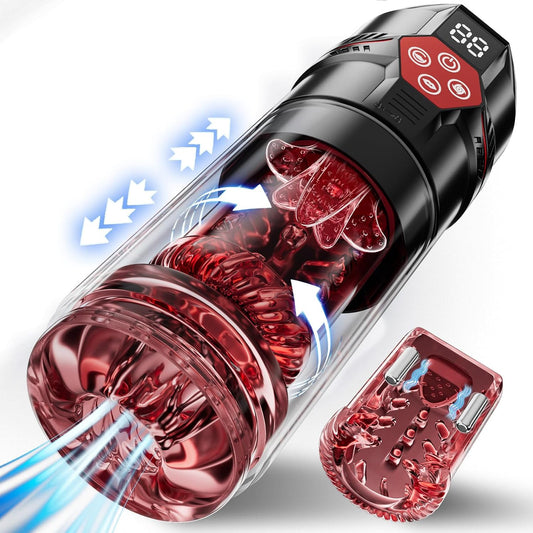
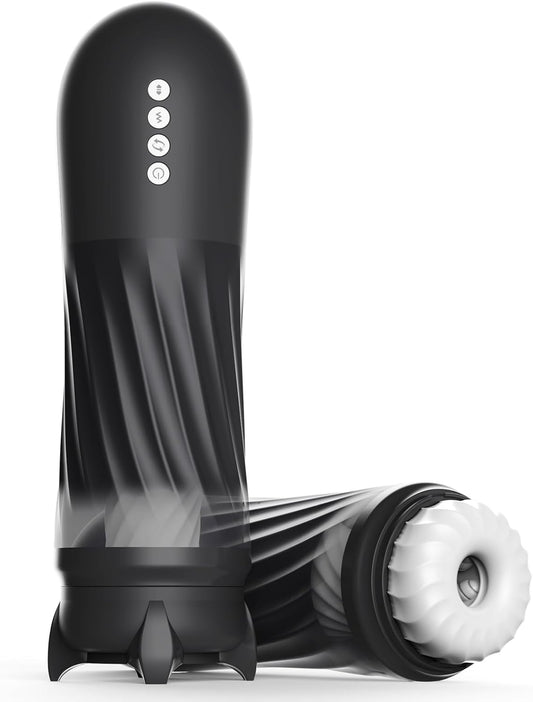
Exploring sensation and trust is most rewarding when it is safe, consensual, and well-communicated. If this article sparked your curiosity about sensation play, these thoughtfully designed, body-safe tools can help you and your partner explore new dimensions of intimacy at your own pace—with comfort and consent leading the way.
💝 Recommended for You

💝 Recommended for You

Conclusion
The science of sexuality consistently points toward the same conclusion: curiosity, communication, and consent beat shame and assumption every time. Whether you are wondering about sensation play, pregnancy risk, or the quirks of your own arousal, credible research can turn awkward questions into opportunities for deeper connection. Keep asking, keep learning, and let evidence—not embarrassment—guide your intimate life.
HeartCaptor Team is dedicated to sharing science-backed insights that help you build deeper intimacy and connection. Explore our collection of thoughtfully designed, body-safe products to support your journey toward confident, consensual pleasure.
タグ: