











The Science of Pleasure and Happiness: Multiple Orgasms, Sexual Fantasy vs. Reality, and the Intimacy–Well-Being Link
Some questions about sex never go out of date. Are multiple orgasms real, or just an urban legend? Is adventurous sex in exotic locations as glamorous as the movies suggest? And does a satisfying intimate life actually make us happier — or is it the other way around? Decades of sex research offer surprisingly clear answers to all three. Let's look at what the science says, and what it means for your own intimate well-being.
Are Multiple Orgasms a Myth?
Short answer: no — but the experience is far from universal, and it differs dramatically between men and women.
Multiple orgasms were first documented by sex researchers decades ago, and the findings have held up remarkably well. In one landmark study of more than 800 female college graduates, nearly 43% reported having experienced multiple orgasms — defined as several climaxes within a single sexual encounter, without losing arousal in between. For a substantial share of women, then, this is a real and repeatable experience rather than a rare anomaly.
Men's physiology tells a different story. After orgasm, most men enter what scientists call the refractory period — a recovery window during which no amount of stimulation can produce another climax. Depending on the individual (and on age), this window can last minutes or hours. Researchers believe the refractory period is tied to neurological and hormonal shifts that follow male orgasm, although the exact mechanisms are still not fully understood. What is clear is that refractory periods are common in men and uncommon in women, which neatly explains the observed difference.
What This Means for Real Couples
The most useful takeaway isn't a competition over numbers — it's permission to slow down. Because many women's arousal doesn't simply switch off after one climax, pleasure can be approached as an unhurried, exploratory process rather than a race to a single finish line. For couples, this reframes intimacy: lingering touch, continued stimulation after a first orgasm, and open conversation about what feels good can all extend and deepen a shared experience. And for men, understanding the refractory period removes unnecessary pressure — it's biology, not a personal shortcoming.
Fantasy vs. Reality: The Truth About Adventurous Locations
Few scenarios are as romanticized in film and fiction as spontaneous passion on a moonlit beach. But sex researchers point out that the fantasy and the reality rarely match.
Start with the legal dimension: unless you happen to own a private beach, any shoreline available to you is public property, where sexual activity is very likely prohibited — yes, even on clothing-optional beaches. "Optional clothing" is not the same as "permitted sex," and the potential cost of fulfilling this particular fantasy could include legal consequences rather than a fond memory.
Then there's the purely practical side. Beaches are full of sand, salt water, and broken shells — none of which are kind to sensitive skin, and all of which are carefully edited out of movie scenes. What looks effortlessly glamorous on screen tends to be gritty, chilly, and uncomfortable in real life.
The healthier lesson here isn't that adventurous desire is wrong — novelty and anticipation are genuinely powerful ingredients in long-term passion. It's that the excitement people crave from exotic settings can be recreated far more comfortably at home. New environments within your own space, different times of day, sensory variety, or simply treating intimacy as a planned occasion rather than a routine can deliver the same spark without the sand.
Does a Healthy Intimate Life Make You Happier?
This is one of the most studied questions in the psychology of sexuality — and the honest answer is nuanced.
Multiple large-scale studies have found that people who report more frequent sexual activity also tend to report greater overall happiness. The association is robust and shows up across different populations. However, nearly all of this research is correlational, which means it cannot tell us which direction the arrow points. Does satisfying intimacy cause happiness? Quite possibly. But it's just as plausible that happy, emotionally secure people simply engage in intimacy more often — or that some third factor, like relationship quality or low stress, drives both.
For everyday life, the precise direction matters less than the pattern itself: intimacy and well-being travel together. Couples who protect time for closeness — affectionate touch, unhurried connection, open communication about desire — consistently report feeling more satisfied, both with their relationships and with life in general. Rather than treating intimacy as a luxury to fit in "when there's time," the research suggests it functions more like a pillar of emotional health, alongside sleep, movement, and social connection.
Bringing the Science Into Your Own Life
Pulling these three threads together, a few practical themes emerge:
- Replace goals with exploration. Pleasure isn't a performance metric. Understanding that arousal ebbs and flows — and that women's capacity for continued pleasure often extends well beyond a first climax — frees couples to explore without pressure.
- Channel fantasy wisely. The desire behind adventurous fantasies is healthy and worth honoring. The skill is translating that desire into safe, comfortable, and legal expressions of novelty.
- Treat intimacy as wellness. The consistent link between sexual satisfaction and happiness is a reminder that closeness deserves a protected place in a busy life — not as an obligation, but as a genuine investment in how you feel.
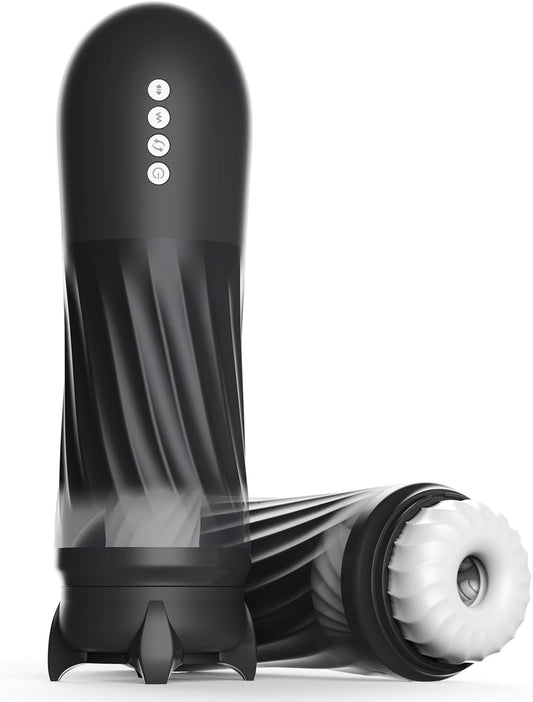
Curious to put this science into practice? Unhurried exploration is easier with tools designed around real anatomy and comfort. Whether you're discovering your own responses solo or extending shared pleasure with a partner, these thoughtfully designed wellness devices support exactly the kind of patient, pressure-free discovery the research encourages.
💝 Recommended for You

💝 Recommended for You

The Bottom Line
Multiple orgasms are real, though not universal — and their existence is best read as an invitation to unhurried exploration rather than a benchmark to hit. Glamorous fantasies are healthiest when their underlying craving for novelty is met in comfortable, consensual ways. And while science can't yet prove that intimacy causes happiness, the two are so reliably intertwined that nurturing one almost always supports the other.
Your intimate well-being is part of your overall well-being. Approach it with curiosity, patience, and honest communication — the same qualities that make every other area of life richer.
Tags:
Previous
How Common Is Cheating? What Decades of Research Reveal About Trust and Connection
Next
Two Hearts, One Rhythm: The Science of Emotional and Physical Synchrony in Love